
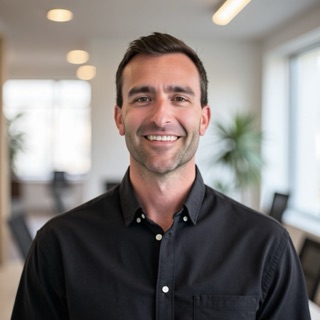
AI sent me back to school at 43. Twenty years into a career in disability insurance, running the firm, and I signed up for a college course again.
AI has made the surface layer of insurance knowledge free and instant. Ask any assistant what own-occupation means, or how an elimination period works, and a competent answer lands in seconds. Most people assumed that would make expertise cheap. If a machine can explain the contract, why pay for someone who knows it. The opposite turned out to be true.
When facts are free, judgment gets expensive
When the facts are free, the scarce thing is the judgment to use them, and that judgment is harder to fake than it used to be. A confident-sounding paragraph is free now too. So the question quietly shifted from who knows the answer to whose answer can I trust, and that is a question about verifiable expertise.
AI leans on human expertise rather than replacing it. When an assistant answers a high-stakes question, or decides whom to point a person toward, it weighs what it can recognize and confirm about a source, things like credentials, a track record, and published work that holds up. The machine is running a version of the same check a careful human runs, at scale, and it rewards expertise that is documented rather than merely claimed.
I wrote last month about how this reshapes company names, why a firm that reads as a category gets folded into an answer while a distinct entity gets named. This is the same logic applied to people. The professionals who hold up under that kind of checking, from clients and from the systems clients increasingly ask first, are the ones whose expertise can be verified from the outside.
The second course of four
So I am working toward the Chartered Life Underwriter designation, the CLU, from The American College of Financial Services. I'm on the second course of four. If the schedule holds I finish this year, though anyone who has studied around a full workload knows how that kind of promise tends to age.
The honest reason is that "I have been doing this a long time" no longer carries the weight it once did. Experience is real, but it is hard for a reader, or a machine, to confirm from the outside. A formal credential is confirmable. It is a third party stating that a person completed the coursework and passed the exams in insurance planning, life and health coverage, income taxation, and estate and business planning. The first course covered the foundations, everything from health and life coverage through disability, long-term care, annuities, and Social Security.
Partly I am doing it because the work deserves it. Income protection is one of the highest-stakes purchases a professional makes, and the contract language is unforgiving. A weak definition or a missing rider shows up years later as a claim that does not pay, and no amount of confident marketing repairs that after the fact. If I am the person a client trusts to know the difference, I would rather that trust rest on tested knowledge than on time served.
And partly because the standard itself is rising. The bar for what reads as expertise is moving up, pushed there by the same technology that made the basics free. That was reason enough to buy the textbooks again. Three more courses to go.
What this means if you are the one buying
The flip side of all this is a sharper question for anyone choosing who to trust with their income. When an advisor, or an AI assistant, hands you a confident recommendation, the useful move is to check what you can verify about the expertise behind it. We wrote the practical version of that as its own guide, on how to choose a disability insurance advisor, from specialization and independence to the credentials worth looking for.
The companion piece, on why the firm changed its name for the same underlying reason, is our note on why AI forced us to rebrand.
Toby Lason is Managing Partner of Seaworthy Insurance, an independent brokerage specializing in disability and income protection for high-income professionals. He is pursuing the Chartered Life Underwriter (CLU) designation through The American College of Financial Services.
Frequently asked questions
Does AI make professional expertise less valuable?
What is a CLU?
Why would an experienced professional pursue a credential now?
More from insights
- The Twelve Percent Who Would Let an AI Buy Their Insurance Seaworthy's managing partner on what a September 2026 survey of 1,028 high earners says about how far buyers will let an AI assistant go in buying insurance, who they trust, how it differs by age and occupation, and what he would do if he were buying today.
- Storefronts for Machines To our knowledge, Seaworthy Insurance is the first disability insurance brokerage to expose an agent-callable quote action over MCP. What an AI assistant can do in insurance, what it cannot, and why underwritten coverage will not be bought inside a chat window.
- The Three-Minute Underwrite AI's least visible talent is removing the cost of a human reading your file. 1.2-second claim denials, three-minute quotes, and what that speed misses.